When you hear the words living well with COPD the first thing that springs to mind is you have to be kidding! How can you live well with a disease that gradually suffocates you over many years? A lot of focus is placed on treatment, prevention and early detection. Technology is developing so patients and healthcare professionals can monitor health better with new devices.
I’m not a healthcare professional nor have I had any formal training in the respiratory field. I’m a patient with severe COPD and I have a system, a system that works. It works for me and the fact is there is enough science to suggest this system can work for many patients. I call it the four pillars of COPD Management.
Knowledge
As patients, if we are truly serious about living a better quality of life with COPD then we need to learn as much as we can about our disease. I like to personalise this disease and often call it my COPD. COPD can vary greatly from patient to patient so it’s up to us to own our disease to know what will work best for our circumstance. In this day and age, we are flooded with information about respiratory disease, some is good, some not so good.
Identifying what’s real and what’s not, can be tricky and require the consideration of an expert. A patient should be encouraged to engage their respiratory specialist with any information they feel needs to be clarified. Personally, I have a list of questions for my respiratory specialist every time I see him and I know if there is something I need to know between visits I can contact his clinic for advice.
Medication
There is no doubt before we can try to improve our quality of life we need to stabilise our COPD. This is where medication is so crucial. It can take time for patients to work out a routine to ensure they take their medication on time, as prescribed, using the correct technique so they get the maximum dose. The type of medication and the delivery system used is very important for the patient to be aware of.
Personally, I take my medication morning and night before I brush my teeth. I keep my medication with my toothpaste as an added measure to not forget to take it. By timing it this way I’m ensured of rinsing my mouth out thoroughly. Once a patient has their disease stable and is comfortable with their medication they can move towards improving their quality of life.
Nutrition
Many patients I talk to tell me nutrition is something rarely discussed with their healthcare professional, if at all. When I first started on my COPD journey I believed exercise was the number one priority for improving my quality of life. While I still believe it is crucial there are more important steps needed to be put in place before we can take on regular exercise. Good nutrition allows a patient to have meaningful and productive exercise sessions. Without trying to advocate any particular eating plan it has become my believe through experience the elimination of inflammatory foods is very important in our overall eating strategy.
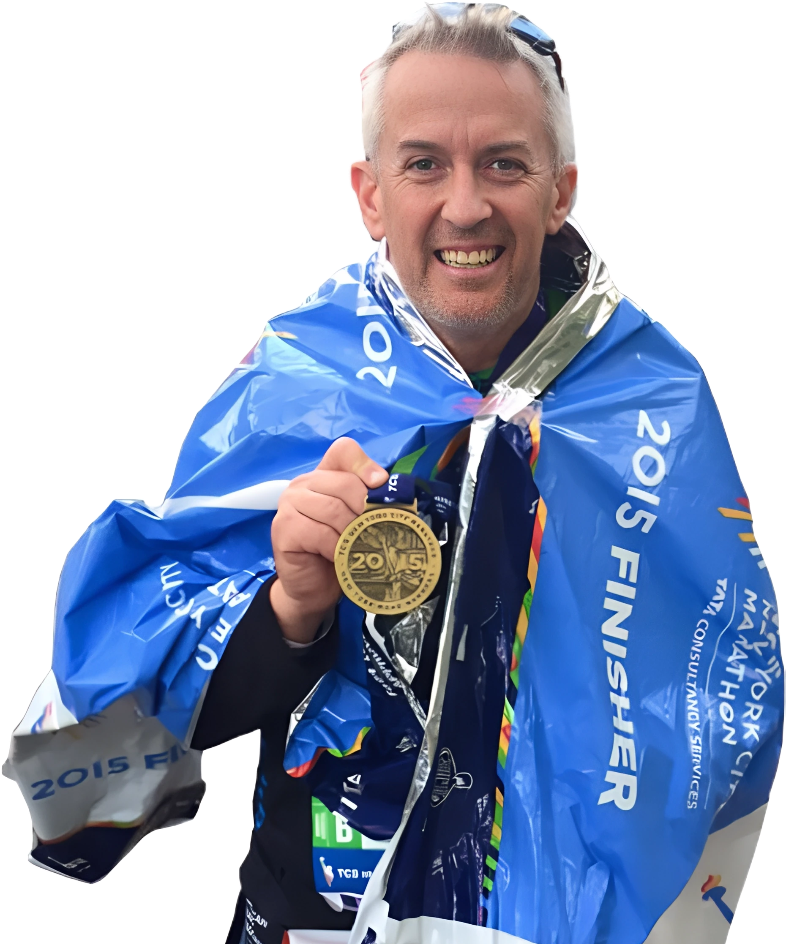
Carbohydrates and refined or processed foods have a significant impact on our respiratory system as these foods are highly inflammatory. In the last 10 months, I have significantly cut the amounts of these foods from my diet with fantastic results. Whilst I’m still breathless every day, I am breathing easier as compared to before eliminating these foods. This was very apparent when competing in my last marathon as my time improved by over 30 minutes to that of my New York marathon run.
Both courses had their challenges. I used the same training program; however my eating plan was very different to previous events. Changing the types of foods I consumed allowed me to drop 10kg in weight, 7kg of which was visceral fat. Recently I carried out a crude experiment on a treadmill. My current weight is 65kg, I walked 1klm at 6kph. I then place a 10kg weight in a backpack, this weight represented the weight I had lost. I then proceeded to walk another 1k at 6kph.. The result was I became far more breathless and started to desaturate on the 2nd kilometre.
This was to be expected as I’m obviously making my body/respiratory system work harder. Imagine how many patients in the respiratory world who are carrying some extra weight would benefit by losing weight. I must admit I was surprised at how much harder it was to carry the extra weight.
Exercise
For those of you who have followed my journey via my website Copd Athlete you know I’m an exercise fanatic. Marathons, Ironmans and other endurance events are my passion and while they have certainly improved my health the average patient doesn’t have to go to these lengths to improve theirs. Pulmonary rehabilitation is the perfect starting point for all COPD patients wanting to be active especially those who are not the athletic type.
Learning about the types of exercise which is good for a patient is just a part of the benefits of a good programme. The knowledge you can gain from the healthcare professionals who run the programs, as well as fellow patients, is invaluable. If patients can master the art of enjoying exercise with COPD, then they are far more likely to make regular exercise a part of their life. Exercise can be enjoyable with this disease if you approach it with the right mindset, a positive one.
I’m sure not everyone will agree with how I believe COPD patients should be managed and I do acknowledge when accessing a patient there can be more than one disease to be considered. However, it’s my belief from my own experiences, adopting these four pillars, especially to newly diagnosed patients would greatly enhance their quality of life.